Excerpt: Confused about DB9, DB15, and circular M16 AISG RET cables for telecom antennas? This guide explains their core differences, signal functions, application scenarios, and exact compatibility with Huawei, ZTE, Ericsson, and Nokia RRU devices for 4G and 5G base stations.
In 4G and 5G telecom base station construction, RET (Remote Electrical Tilt) cables serve as the critical link to remotely adjust antenna downtilt, monitor RCU status, and report system alarms. Many buyers and field installers struggle to tell apart three common RET cable types: DB9 D-Sub, DB15 D-Sub, and M16 circular AISG cables.
These three connectors are not plug-and-play interchangeable. In addition, they carry different signal definitions, power delivery designs, and daisy-chain capabilities. This post breaks down their functions, real-world deployment cases, and brand matching guidance for Huawei, ZTE, Ericsson and Nokia telecom systems.
Basic Overview of 3 RET Cable Types
All RET cables bridge the RRU (Remote Radio Unit) and antenna RCU (Remote Control Unit). Even so, their internal wiring and design purposes differ greatly.
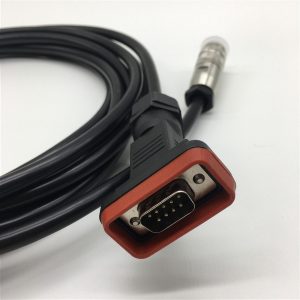
The DB9 connector is a classic serial D-Sub port widely used on legacy telecom hardware. Its most notable feature is signal-only transmission without integrated power supply.
- Signal definition: It carries RS485 communication data only, with no DC power conductors.
- Working principle: The antenna RCU needs a separate power source, while DB9 handles tilt control and status feedback.
- Daisy-chain support: Not available; it only enables point-to-point control for a single antenna.
- Core advantage: Simple wiring and reliable anti-interference performance for legacy control and onsite debugging.
Main application: Matched for legacy Huawei RRU RET ports, and also used as local debugging ports on many telecom devices.
DB15 is a larger D-Sub interface built for telecom RET systems. It combines DC power supply and RS485 communication signals inside one single connector, so one cable can fully power and control the RCU.
- Signal definition: Integrated power (+DC/GND) plus AISG RS485 A/B differential signals.
- Working principle: No extra power cable required; one cable delivers power and control commands to the antenna.
- Daisy-chain support: Almost never supported; limited to single-antenna point-to-point control.
- Limitation: No global unified standard. Manufacturers fully customize pinout definitions, which leads to poor cross-brand compatibility.
Main application: Standard matching interface for ZTE mainstream RRU RET ports. It also appears on a small number of older Huawei multi-channel controllers.
The M16 8-pin circular connector follows the official AISG 2.0 global standard. It is the most universal and future-proof RET cable choice for modern 4G and 5G sites.
- Signal definition: Standard DC power, RS485 differential signals and reserved expansion pins.
- Working principle: It supports power pass-through and full AISG protocol communication.
- Daisy-chain support: Fully available via IN/OUT dual ports, allowing multiple antennas wired in series.
- Advantage: Unified worldwide standard, cross-brand compatible, and supports the full feature set including tilt adjustment, RCU firmware reading and fault alarm detection.
Main application: Universal antenna RCU side interface for all major brands. It is also factory fitted on new-generation Ericsson and Nokia RRUs.
Core Difference Comparison Table
| Feature |
DB9 RET Cable |
DB15 RET Cable |
M16 Circular AISG Cable |
| Power Supply |
No power (signal only) |
Built-in DC power + data |
Standard AISG power + data |
| Daisy Chain |
❌ Not supported |
❌ Rarely supported |
✅ Full AISG 2.0 support |
| Standard Level |
Legacy serial custom |
Vendor custom non-standard |
Global AISG 2.0 official standard |
| Compatibility |
Only for old Huawei RRU |
Only for ZTE mainstream RRU |
All brand antennas & new RRUs |
| Main Function |
Debug & single antenna control |
Single antenna power & control |
Full-function cascading control |
Brand-Specific Matching Guide (Huawei / ZTE / Ericsson / Nokia)
For every brand, the antenna RCU side always uses M16 8-pin circular AISG ports. Differences only exist on the RRU hardware side, which determines which cable assembly you need to order.
1. Huawei
Industry rule: Legacy Huawei RRU uses DB9 RET port
- Old 4G Huawei RRUs (3908/3929/5507 series) adopt waterproof DB9 as the dedicated RET control port.
- Matching cable: DB9 to M16 8-pin AISG cable.
- New 5G Huawei RRUs remove D-Sub ports and use standard M16 circular ports directly.
- Huawei DB15 ports mainly carry alarm signals, not RET antenna control.
2. ZTE
Industry rule: Mainstream ZTE RRU uses DB15 RET port
- Nearly all ZTE 4G/5G macro RRUs use waterproof DB15 as the default RET interface.
- Matching cable: DB15 to M16 8-pin AISG cable, widely deployed in operator projects.
- Only a small selection of new ZTE mini RRUs come with native M16 ports.
3. Ericsson
- No DB9 or DB15 D-Sub RET ports on modern hardware.
- New Air series RRUs feature standard M16 circular AISG ports.
- Matching cable: M16 to M16 dual circular straight cable.
- A small number of legacy units use dedicated FS1 round connectors, with no universal D-Sub compatibility.
4. Nokia (NSN)
- AirScale new generation RRUs ship with standard M16 AISG ports.
- DB15 only exists on very old legacy equipment; DB9 serves purely for local debugging and never runs RET antenna control.
- Primary matching cable: M16 dual circular cable.
Critical Engineering & Sourcing Tips
- Do not reuse generic DB9 or DB15 cables: DB9 and DB15 pinouts are vendor-specific. Huawei DB9 cables cannot work with ZTE DB15 ports, and the reverse is also true.
- DB9 carries no power: Avoid relying on DB9 for standalone long-term antenna control. Always confirm separate auxiliary power supply.
- Daisy chain is lost after conversion: DB9-to-M16 and DB15-to-M16 transition cables only support single antenna control, and cascading functions will not work.
- M16 is future-ready: New 5G hardware from these four top brands all adopt M16 AISG ports to replace older D-Sub connectors.
Quick Selection Guide
- Old Huawei 4G stations: Choose DB9 to M16 AISG cable
- ZTE mainstream stations: Choose DB15 to M16 AISG cable
- Ericsson / Nokia / New 5G sites: Choose M16 dual circular AISG 2.0 cable
FAQ
Q: Are DB9 and DB15 cables interchangeable?
A: No. DB9 is signal-only for legacy Huawei, while DB15 delivers power plus data for ZTE. Different pin definitions and power structures make them completely non-interchangeable.
Q: Can DB9/DB15 support multi-antenna daisy chain?
A: No. Only standard M16 circular AISG 2.0 cables support IN/OUT daisy-chain cascading.
Q: Do all antennas use the same interface?
A: Yes. The RCU side of all mainstream brand antennas adopts unified M16 8-pin AISG port. All differences come from the RRU device side.

 DB9 vs DB15 vs Circular AISG RET Cable: Full Application & Brand Guide
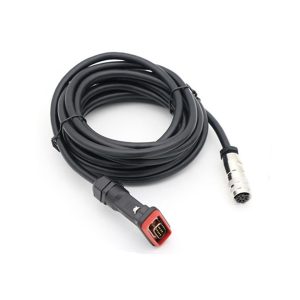 DB9 vs DB15 vs Circular AISG RET Cable: Full Application & Brand Guide
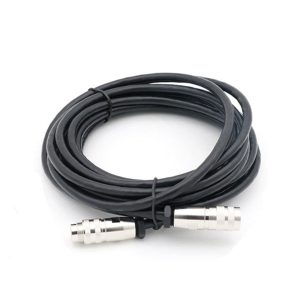 AISG RET Cables: 4-Pin, 5-Pin & 8-Pin – What Are The Differences?
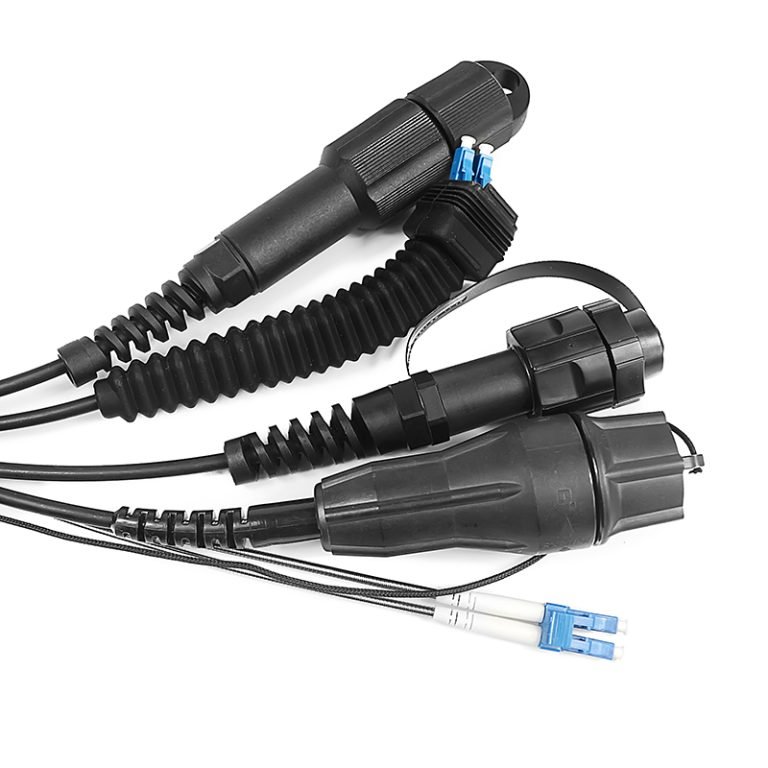 CPRI Cable Guide: Huawei, Nokia and Ericsson Compared
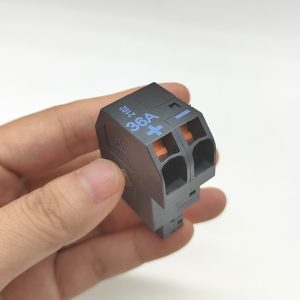 Top Telecom Connector Brands: Amphenol, Jonhon & Huawei RRU Power Connectors Overview
 AISG Cable: The Ultimate Solution for Huawei RRU RET Port Connectivity
